
Key Takeaways
- Strabismus means the eyes point in different directions, and it can begin in childhood or adulthood.
- Vision therapy trains the brain and eye muscles to work together through guided in-office exercises.
- Sessions usually run 30 to 60 minutes, often weekly for several months.
- Kids tend to respond quickly, though adults can improve too.
- Glasses, prisms, surgery, and therapy each address a different part of the problem.
- A full evaluation shows how your eyes team up and focus together.
Why One Eye Drifts And What You Can Do About It
Maybe you’ve noticed your child’s eye drifting toward their nose in family photos. Or you finish a chapter of your book and your words start doubling, your forehead aches, and you close one eye to make the page settle down. Those moments point to the same thing, two eyes sending mismatched information to one brain.
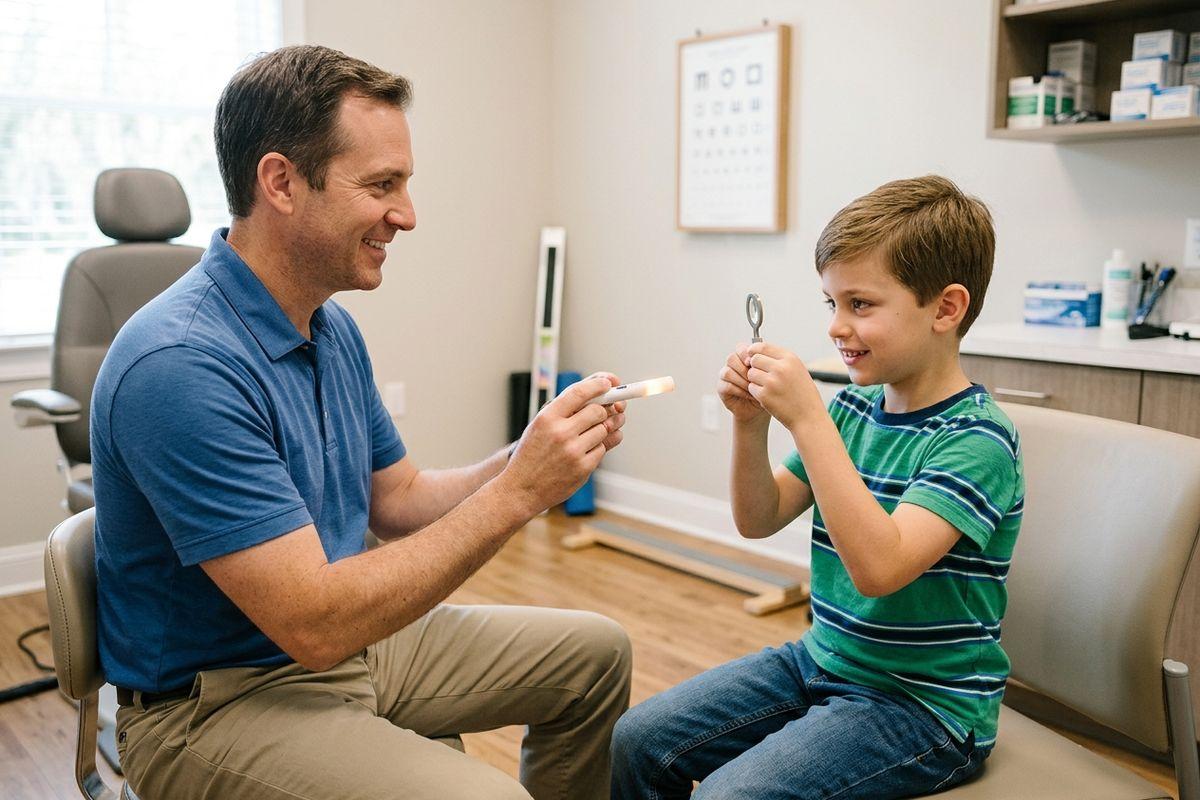
Daniel Island Eye Care offers vision therapy that works by teaching your brain and eye muscles to coordinate as a team, using structured exercises with lenses, prisms, and targeted activities so both eyes can aim at the same spot and hold it comfortably. Think of it as physical therapy for the visual system, built one skill at a time.
What Strabismus Means For Your Eyes
Strabismus happens when the eyes don’t line up on the same target. One eye may turn inward, outward, upward, or downward while the other stays straight. The turn can show up constantly or come and go, often appearing more when you’re tired or concentrating hard.
Some people notice it in toddlerhood. Others develop it as adults after years of comfortable vision.
Signs To Watch For
The eye turn itself isn’t always the first clue. Watch for signs like these:
- Double or blurry vision, especially late in the day
- Headaches, tired eyes, or squinting
- Closing or covering one eye to see better
- Skipping lines while reading, or losing your place often
- Trouble judging distance, like missing a catch or bumping into doorframes
Common Reasons It Develops
Family history plays a role, so if a parent or sibling had an eye turn, it’s worth mentioning at your exam. Uncorrected farsightedness is another common factor, since the eyes overwork to focus and one may pull inward as a result. Differences in how the eye muscles coordinate can also keep the eyes from aiming together.
How Vision Therapy Retrains Your Eyes And Brain
Alignment isn’t just muscle work. Your brain decides how to combine two images into one, and when the eyes disagree, it often starts ignoring one of them. Therapy interrupts that habit by giving the brain repeated practice using both eyes at once.
The program comes from your test results, not a template. The doctor measures how your eyes track, focus, and team up, then builds a sequence of activities matched to the skills that need work.
Tools Used During Sessions
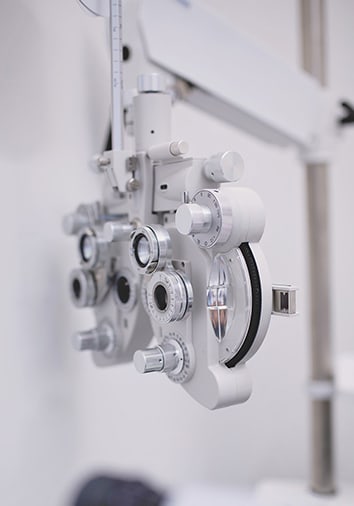
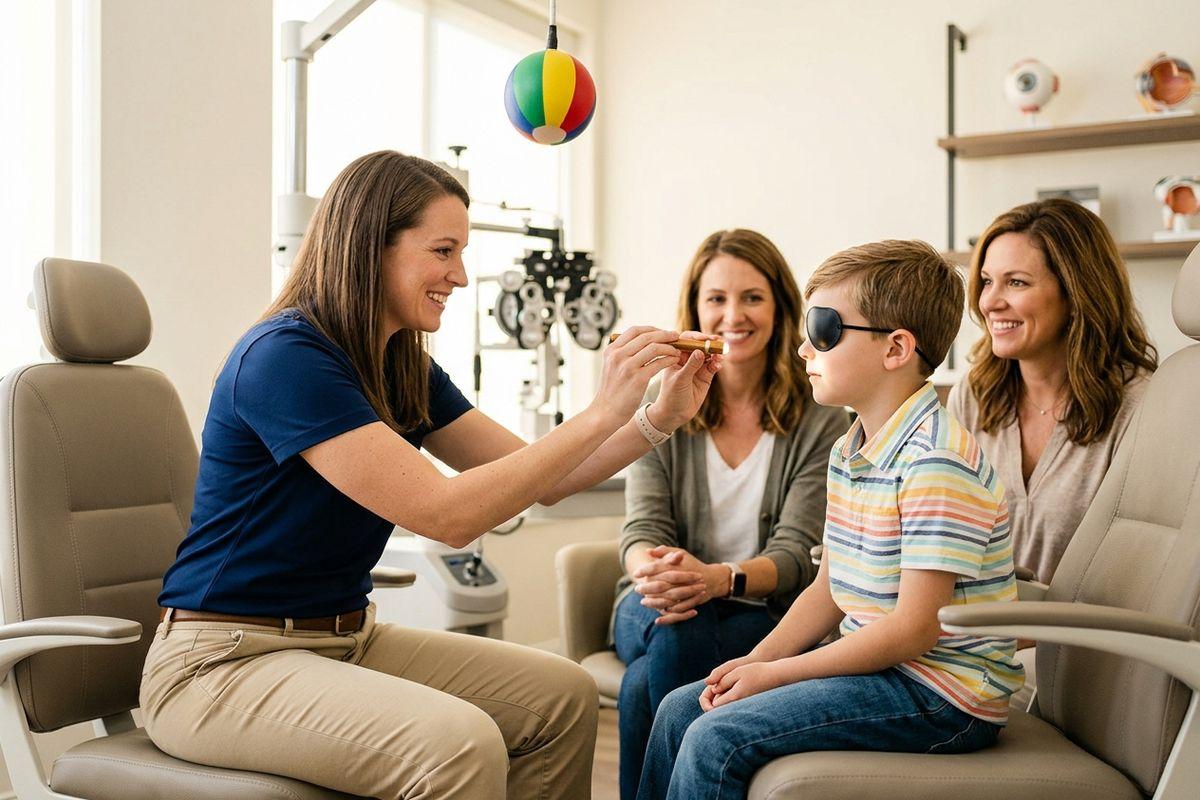
Prisms shift where an image appears so your eyes have to adjust and find it. Lenses and colored filters change the demand on your focusing system. You might also work with computer-based activities, balance boards, tracking charts, or brief patching. All of them sound simple, but each one asks your eyes to do a little more than they could the session before, and that steady progression is what builds lasting coordination.
Clearer, More Comfortable Vision in Daniel Island, Charleston
An eye that drifts doesn’t have to mean a lifetime of double vision, headaches, or squinting through a good book. Whether it’s your child’s eye turning in family photos or your own eyes tiring out by the end of the day, the first step is a full evaluation to see how your eyes track, focus, and team up together.
The team at Daniel Island Eye Care is here to help you find out whether vision therapy is the right fit. Book an appointment with our optometrists today, and let’s help your eyes work together comfortably, at school, at work, and everywhere in between.