
Key Takeaways
- Ocular rosacea can bring redness, burning, watery eyes, and a gritty feeling, sometimes before any facial redness shows up.
- Sun, wind, heat, alcohol, spicy food, and stress may contribute to flare-ups.
- Warm compresses and gentle lid cleaning twice a day can calm symptoms at home.
- Prescription drops, oral medication, and light or heat treatments target inflamed oil glands.
- Regular follow-up visits help keep symptoms manageable over time.
Your eyes sting by mid-afternoon. They water in the car, look pink in photos, and feel like a grain of sand slipped under the lid that never quite washed out. You’ve tried drops from the pharmacy, and they maybe help for 20 minutes.
Ocular rosacea responds to a combination of daily lid care, flare-up management, and in-office treatment from an optometrist at Daniel Island Eye Care who targets the inflamed oil glands along your lash line.
How Ocular Rosacea Connects to Skin Rosacea
Plenty of people with ocular rosacea have the flushed cheeks and visible vessels of skin rosacea too. Plenty don’t.
Eye symptoms sometimes arrive first, months or years before your skin shows anything at all. So a clear complexion doesn’t rule it out.
Common signs can include:
- Redness, burning, and eyes that water for no clear reason
- A gritty, something-is-in-there feeling
- Swollen or crusty lids
- Styes that keep coming back
- Clogged oil glands along the lash line
Why It Gets Mistaken for Dry Eye
The symptom list overlaps heavily with dry eye and blepharitis, which is inflammation of the eyelid margins. Burning, redness, and grittiness appear in all 3.
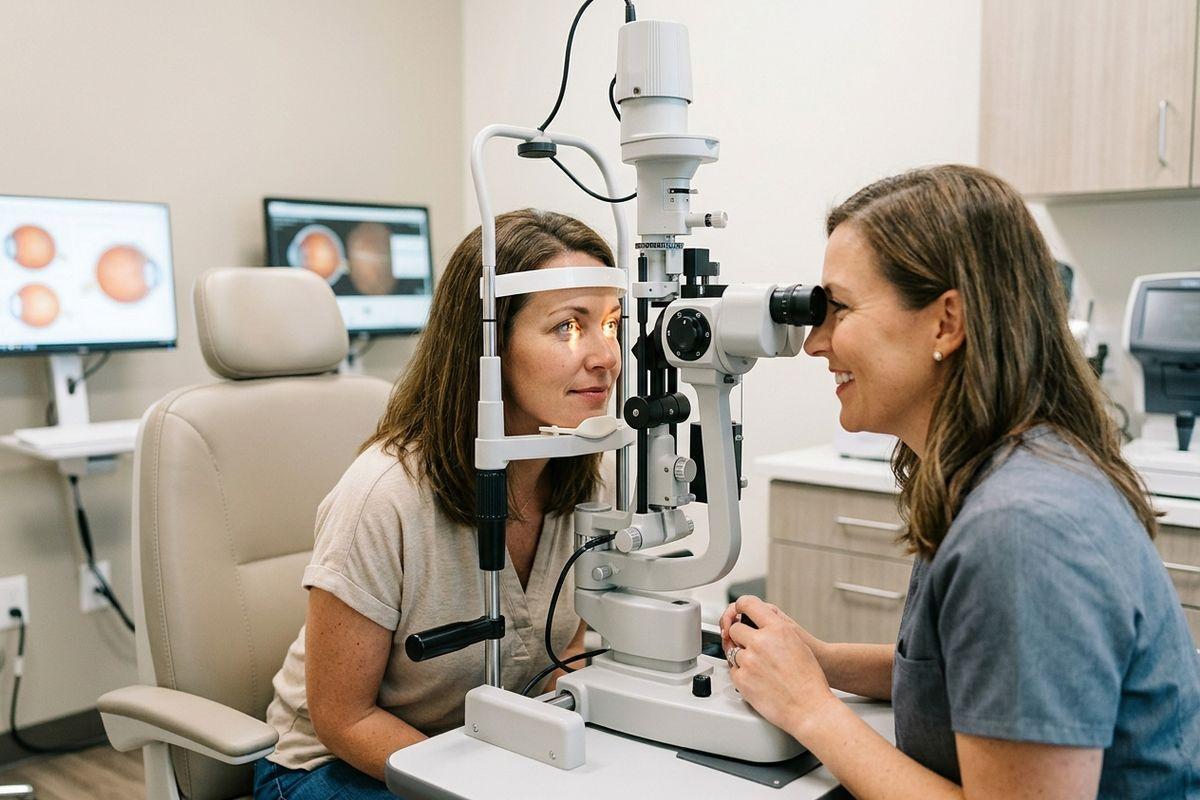
An eye exam can sort it out. Your eye doctor looks closely at your lid margins, the oil glands that line your eyelids, and the quality of your tear film to see what’s actually driving the irritation.
What May Contribute to Flare-Ups in Your Eyes
Flare-ups are personal, but patterns often repeat themselves. Weather does a lot of the work here, especially a Charleston summer. Sun on the water, humid heat, and a stiff wind off the harbor can all leave your eyes burning by dinner. Cold, dry air in winter does the same thing from the opposite direction.
Food and drink matter too. A glass of red wine, a bowl of shrimp and grits with extra heat, or a hot coffee can dilate blood vessels and intensify the redness.
Stress and hard workouts round out the list. A tough week with the kids, a long stretch of poor sleep, or a hot spin class can each nudge a flare-up along. Keeping a short note on your phone about what happened before each bad day helps you and your eye doctor spot your own pattern.

Daily Habits That Help Calm Ocular Rosacea at Home
Lid Hygiene Routine
Start with heat. A warm compress resting on closed eyes for several minutes softens the thickened oil sitting in the glands so it can flow again. A microwavable eye mask holds temperature longer than a washcloth.
Use a lid wipe or foaming cleanser made for eyelids, and gently work along the lash line where the crust collects. Twice daily, morning and night, does more than an occasional deep clean.
Everyday Support for Your Eyes
Other relief options can include:
- Preservative-free artificial tears, since preservatives can irritate already inflamed lids
- Sunglasses with UV protection anytime you’re outside, wrap styles for windy days on the boat
- Omega-3 supplements, which support healthier oil production in the glands
- Fragrance-free skincare and makeup, with anything harsh or scrubby left on the shelf
In-Office Treatments
When home care isn’t enough, your optometrist can offer more personalized options. Prescription drops can settle the inflammation directly, and low-dose oral medication helps stubborn cases where the glands stay blocked no matter how faithful you are with compresses.
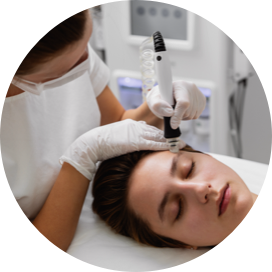
For the glands themselves, in-office thermal treatment applies steady heat and gentle pressure to clear blockages a home compress can’t always reach. Intense pulsed light (IPL) treatment, a series of quick pulses delivered along the cheeks and lids, can quiet the inflamed vessels that feed the irritation. Many people come in for a few sessions spaced several weeks apart.
Your eye doctor can also treat a stye or lid infection first, so the longer plan starts on calmer ground.
Come See Us
Relief from ocular rosacea comes down to consistency and the right medical support. By pairing a simple daily routine at home with targeted treatments from your eye doctor, you can calm the burning, clear up the grittiness, and keep flare-ups from disrupting your day. If home care isn’t giving you the lasting comfort you need, schedule a visit with our team at Daniel Island Eye Care to get a personalized treatment plan tailored to your eyes.